Creative Blog.
Creating Effective Email Campaigns
How to create effective marketing campaigns in a modern age with so many tools. What apps do I use, what are some useful tips?
Email is an important communication platform today both personally and professionally. From a business sense, it can be a great way to reach a very specific audience. Why? Because people use it regularly, so you have their attention. So the strategy you employ with how it looks, and how it performs—for both you, the business, and the customer, are really important. Nowadays we need to consider all of the following:
1. All the different devices, screens and software being used.
2. Spam laws with rules on how emails can be created.
3. Spam and junk filters. Most emails get filtered so we need to employ ways to avoid that.
4. There is a LOT of email traffic, so how best to stand out form the crowd?
5. Email is one of the primary marketing channels.
6. bandwidth issues now that most people are on cellular service when reading these.
7. Security issues are rampant. According to several technology publications, email phishing scams and hacks are on the top 3 security issues—and an “easy” opportunity.
So what to do? There are several choices today when marketing via email. And just how you send them is as important as how they they look and the quality of the content.
First, there are some basic factors to successful emailing. And what is success? Reaching the right audience, getting them to be interested enough to click, respond, and eventually convert to a customer. There are three key factors: quality content (that people will anxiously respond to), quality design (professional and compelling), and a quality delivery system (modern, effective, responsive, and spam-proof).
Simple and basic html emails are not standard any more— for many reasons. Email used to be just simple and text-based, relying on simple html script—nothing fancy. Using features like CSS, Javascript and other coding languages, you could create some interesting features—but mostly basic— like colored text, animated gifs, and other special effects. But as devices and software progressed and improved, as well as security needs and spam laws increased, it became more challenging to create emails that simply “worked” effectively anymore.
A note on “responsive.” All that means is that it ‘responds’ or reacts to whatever device it’s on. If it’s on a big screen you have more space. If it’s on a phone, it stacks up with content once chunck after another. But there are different levels of responsiveness. For example, simply reflowing a paragraph of text is different than literally designing an experience FOR a smart phone or tablet. In other words, knowing the device, making it easy to read and see on it; Larger and maybe different graphics, larger text, different button layouts, and maybe a simpler “mobile view.” So it makes it either more difficult to program custom emails for several devices (tablets, desktop and mobile)—or considering use of an online email platform like Mailchimp, Constant Contact, and others that incorporate this and many other factors that ensure not just ease of use, but highly successful email campaigns.
So most basic HTML emails lack the responsiveness of modern online email builders which is very important, since most email is read on smart devices. If they don’t respond well to that device, they will be harder to read—and therefore not read at all.
Simple (or basic) html often include nested tables, lower quality graphics, and simplistic code that easily trigger spam and junk filters. To hand-code or custom design html to respond appropriately to “ALL” devices would be very time consuming and unstable. For example, iPhones, Galaxy phones, Windows, Google, and so many other devices—including various tablets, desktops and email app and software all have to be considered and written in the code. This make a very large html document that is sure to not only fail gettin through most modern email servers, but end up corrupt and appearing incorrectly. In addition, often trigger security issues (too easy to program malware), and activate spam and junk protocols—all too common today.
Think of it this way—just like it used be where programming websites was the thing to do, there are now online web builders that make website creation much, much easier, efficient, and effective. Things like AI, codeless-programming, and VR are no longer in the future, rather in the present. It’s very uncommon to have html written websites in Dreamweaver for example than created with all the modern online CMS apps. We also need to remember all the integration required today. Cross channel marketing—social media, websites, CRM, and many other facets of business.
Junk email is becoming as big a problem as any trash, junk, unsolicited phone calls, or unwanted “stuff.” In fact, some studies are showing that it is THE biggest challenge today with the plethora of devices and e-communication today.
To answer to this challenge, online web builders and email apps were created to make a safer, more stable, and effective process for email communication that satisfy both the sender, as well as the recipients. We want honest, safe, helpful emails, and companies want to be able to communicate with qualified leads for conversion.
Email apps provide a modern approach to creating secure emails that respond perfectly to modern devices. They also provide the flexibility of options needed for a wide range of other requirements for today’s marketing channels. Things like analytics, automation, and databases are used (or should be used) quite regularly.
So how do we create effective email marketing campaigns?
For starters, we need to figure out what the leading providers are. It’s good to know what the best tools for the job are so we can create the best product. This is important so we not only know what will be most effective at getting your message out there, but also so you know “how” you will get them done, and “who” will be implementing them. Email is not a one and done deal. They take a lot of effort to create. Good ones at least. So consider the creative talent involved, the content writers, and the technical and physical “implementors” who all—as a team—get it done. And what tool (software) is used.
Let’s talk about some of the leading online email builders. It’s important to note that there are dozens of great choices, so it comes down to your willingness to learn each platform or hiring those that can be part of the team that can use the chosen application. Each has various pricing plans, and its list of options, benefits, and advantages as well as their disadvantages. They all also have many similarities. So I’d encourage you to explore them, read reviews, or talk to someone that knows them to tell you what’s best for you. Here are some leading examples:
Mail Chimp
Mailchimp is an all-in-one marketing platform that helps you manage and talk to your clients, customers, and other interested parties. Their approach to marketing focuses on healthy contact management practices, beautifully designed campaigns, and powerful data analysis. While effective, modern, and moderately easy to use, it does require somewhat of a learning curve to set up.
Constant Contact
Constant Contact is an affordable and easy-to-use email marketing tool that lets you create email marketing templates, automate and manage campaigns, build contact lists, and nurture customer relationships. While a popular platform, Constant Contact is very limited in setting up automations. There is no visual workflow builder, you can only send very basic autoresponders and everything takes too many clicks to set up.
Squarespace
Just like Squarespace has curated stunning website designs for every purpose, there’s an email layout for any audience. Reach your audience no matter where they are. All layouts are made with Squarespace’s responsive designs, so your emails will look great whether they’re viewed on mobile or desktop. Use advanced email marketing tools to automate your email marketing efforts, streamline contact list management, and personalize every message you send. You will need a domain and website to host the emails, as opposed to a standalone email system like Mailchimp.
Hubspot
HubSpot not solely an email builder, rather is a cloud-based CRM designed to help align sales and marketing teams, foster sales enablement, boost ROI and optimize your inbound marketing strategy to generate more, qualified leads. HubSpot is a top CRM pick for two reasons: it has an incredibly comprehensive free edition that outshines most paid CRMs on the market, and you can use it across your marketing, sales, and customer service teams. It does have an expansive setup and learning curve which can be challenging, but with patience can pay off. This is more for it’s CRM and peripherals, and less about the email system, but an impressive email system at that.
Adobe Campaign (with Dreamweaver html)
Adobe Campaign is a cross channel marketing solution that automates email, mobile, social and offline campaigns, also offering a central place where you can access your customer data and profiles. Adobe Campaign is generally used for automated email marketing. When you use Dreamweaver with Campaign, you can combine the email design capabilities of Dreamweaver with the cross-channel marketing capabilities of Adobe Campaign in the Adobe Marketing Cloud. You can also use their new email designer app that allow drag and drop (codeless) email creation. There’s definitely a significant learning curve, takes more time than most email builders, and relies heavily on Adobe software.
Weebly
Weebly Promote is a complete email marketing service that lets you build email campaigns integrated directly with your website, online store or blog. Use Promote to announce a new product to customers, send weekly newsletters to your readers, or share updates with your most loyal fans. You need domain and website integration to make use of email campaigns, as opposed to specific email apps like Mailchimp.
Zoho
Zoho CRM is an example of a customer relationship management (CRM) platform that allows businesses of all sizes to manage their sales, marketing, customer support, and inventory from a single system. Zoho uses a proprietary unique programming language (Deluge) and contains word processing, spreadsheets, presentations, databases, note-taking, wikis, web conferencing, customer relationship management (CRM), project management, invoicing and other applications in addition to email marketing solutions.
So while html-based email is not exactly “over” it’s not the ideal choice. It can still be used. If simplified to simple text with simple fonts, limited colors, and simple (but attractive) graphics placed, it can be a decent and simple email. You can also use html as a “base” for creation, then import into other tools (most all of them allow imports of html) where you can then implement that application’s other features. In other words, don’t attempt to write programming code to create fancy effects, but use the tools features to implement it.
But if you are looking for more advanced options, more cross-platform integration, ease of creation and management, and more modern responsive solutions, then online email building applications are best.
Here are some tips to improve successful email campaigns (and “open rates”)
Use optimized and attractive subject lines that pass through spam filters and attract viewers.
Use subheads or email preview text, especially text that pertains specifically to your audience.
Use specific, targeted, and confirmed lists—“qualified” leads.
Avoid suspicious “spam” sensitive words like “FREE,” “SPECIAL PROMOTION,” or “ORDER NOW…”
Send at the right time. Tues, Wed, and Thursday are best. 6am, 10am, or 2pm
Design for mobile. More than 50% of emails are opened on smart devices.
Use clever and quality design—make it interesting, professional, and intriguing
Keep it simple, but make the content very compelling
Use modern tools and apps that make it easier to create MORE email campaigns and offer cross platform integration.
Think of your audience. What will THEY respond to, read, open, and engage?
Please subscribe!
https://podcasts.apple.com/us/podcast/toddtalks/id1483361044
About Todd: I am a lifetime creative professional dedicated to helping other businesses and individuals achieve their best—their Zen.
I’m Todd Mitchell. Lifetime artist, entrepreneur, and 30-year creative professional. I develop creative ideas and solutions that help inspire the best in people, products and businesses. My mission is helping others achieve their absolute best. Personally and professionally.
Mitchell Creative Group is a micro-virtual creative agency outside of Boston, serving small businesses with professional creative services: Branding and identity, marketing and advertising, web and print, video and new media. Small businesses need high-level creative support— quickly, and at a fair, flexible price. And that’s what I provide.
https://www.mitchellcreativegroup.com
todd@mitchellcreativegroup.com
(508) 494-8182
JOIN THE PODCAST!
Apple: https://podcasts.apple.com/us/podcast/toddtalks/id1483361044
Spotify: https://open.spotify.com/show/7iF3nmexQwTOW83Dp9h79L
Social Media BOOST vs. Social Media Ads
Boosted posts on social media like Facebook and Instagram are a little less complex than ads and are easier to get a handle on if you are used to your social media’s News Feed. Unlike an ad, a boosted post is simply a regular post that you pay to reach a wider audience. Most boosts cost maybe $10-$25 although you can arrange more budget and reach—whereas advertising is much more involved and costly.
What are boosted posts?
A boosted post appears in your feed or timeline. They are created in the same place you would normally create a post, with the added option to “boost.” Boosting posts is a simpler way to advertise, since it doesn’t require you to set up an Ads manager account and a more lengthy and costly process. For boosted posts, you typically fill out:
- Your target audience
- Your budget
- The length of time you want the post to run
What’s good?
Boosted posts are simple, basic and are great for companies who are just starting out. Boosted posts can be great for simply expanding brand awareness and reaching new users with a small budget. You can simply optimize engagement, awareness, or page likes/followers.
What not so good?
The features when using a boosted post for your business are a bit limited. If you’re looking for more comprehensive features that align with other business goals, like driving sales or generating leads, you should look at implementing the channels ads instead. It has a greater reach.
What are social media ads?
Linkedin, Facebook ads for example are created in the Ads Manager for each platform. They are tracked separately from your organic traffic and run in the background only targeting your curated audience. Facebook and Linkedin ads can do everything boosted posts can do, but much more. There’s more paperwork, more cost, and more time needed—but can be very effective if strategically done well.
What’s good?
With Facebook and LinkedIn Ads, there are more objectives and more features:
- More specific campaign goals: Such as optimizing for increasing website traffic, app downloads, leads, conversions, and more…
- Advanced and detailed audience targeting
- Interest and behavior targeting, re-marketing options
- Additional ad placement options like stories, messenger, and the audience networks
- Spending optimization: Ad managers will optimize your budget to drive the most efficient performance
- Campaign reporting: Insight into what ad types, audience targeting, placements, and more work best for your business
What not so good?
Facebook and LinkedIn ads can be a bit confusing if you’ve never worked in the ads manager before. The plethora of advertising options may seem more complicated and harder to get a grip on what all that data means— it can be time consuming, a full time job by itself, and typically costs hundreds if not thousands of dollars to be effective.
So what’s best?
My advice— start with boosting posts. But strategically, not just for the hell of it. Work with a creative team or person to help if you can. That will help ANY of your marketing. But start simple with boosting. Then, if you have the time and patience— as well as budget, or have someone that wants to help you— start an ad campaign. Again, strategically and professionally. Don’t waste time and money on ads… Use them as a meaningful and impactful part of a wider marketing plan!
Please subscribe!
https://podcasts.apple.com/us/podcast/toddtalks/id1483361044
About Todd: I am a lifetime creative professional dedicated to helping other businesses and individuals achieve their best—their Zen.
I’m Todd Mitchell. Lifetime artist, entrepreneur, and 30-year creative professional. I develop creative ideas and solutions that help inspire the best in people, products and businesses. My mission is helping others achieve their absolute best. Personally and professionally.
Mitchell Creative Group is a micro-virtual creative agency outside of Boston, serving small businesses with professional creative services: Branding and identity, marketing and advertising, web and print, video and new media. Small businesses need high-level creative support— quickly, and at a fair, flexible price. And that’s what I provide.
https://www.mitchellcreativegroup.com
todd@mitchellcreativegroup.com
(508) 494-8182
JOIN THE PODCAST!
Apple: https://podcasts.apple.com/us/podcast/toddtalks/id1483361044
Spotify: https://open.spotify.com/show/7iF3nmexQwTOW83Dp9h79L
Marketing planning & budget is critical to any business
Developing a sound marketing strategy and budget are vital to the business. Consider the 23 primary components of marketing and what that might cost to implement. But first, a simple review of the top 5 marketing questions: What is it that you are marketing? Why are you? How will you do it? To whom precisely? and what’s a reasonable budget?
Marketing planning & budget is critical to any business.
Whether you have a small startup lemonade-stand business, or a large enterprise corporation, developing a sound marketing strategy and budget are vital to the business. Why? First let’s define marketing and why that matters.
What is marketing?
Most people know generally what marketing is, but knowing what it means today (2021) is important because while the fundamentals have always been there over the years, the methods, vehicles, tools, and customers have changed dramatically. The simplest way I generally define marketing is: “Delivering a specific business, product or service to the marketplace—why, how, and to whom.” So it can be a golf ball, or a plan to inhabit mars, they each have a very specific target customer base, a “why” and a “how.” And just knowing the basics behind each of these helps build a sound plan. And that includes a plan for what you invest in that marketing plan.
Budget planning
A part of the marketing game plan includes a budget plan. This simply defines how much emphasis—both time and monetary—you think you might want to invest in marketing your product, service, or business. And this is important. You will definitely need to actively market. Send the word out, spread the news, and continually engage your ever-changing customers. If you don’t, literally, your business sits idle. Nobody comes to you, you need to invite them and regularly engage them. Treat them as your true friends. Nurture your customers. And this requires driving vehicles to do so, like websites, social media, email, mail, etc… as well as building a sound brand—quality graphic design.
It’s important to develop a budget that coincides with what you will employ, how, and when— and at what level. Having a very basic plan goes hand-in-hand with how much “oomph” you put in to your marketing. Think about how hard it is to reach your audience let alone find them with all the competition and distraction. So investing a little will get you a little, and investing a lot will get you more. Why? More exposure. The more eyes and ears you have on it the better—however, a major caveat to that though is how well it’s being done/implemented! You can spend a fortune on a sloppy ad campaign, and if it doesn’t attract your customer, they don’t engage. And that can be a waste of time and money. So review the primary components of marketing below and determine the ideal pieces that may be right for you— and break up a rough cost on what you can afford initially, and in the future. Then really work hard at putting the marketing plan to work.
So consider some of the primary parts of marketing a business, they all will have a certain affect on your business and each have a specific time and cost:
23 Primary components of marketing:
Branding and design
Advertising in print
Website design and production
Website edits
News
Blogs
SEO
Print material (brochures, mailers, handouts, business cards)
Collateral branded material (letterhead, powerpoint)
Email marketing
Podcasting
Radio ads
Social media advertising
Google advertising
Discounts and coupons
Social media posting (and to which ones)
Special content: White papers, case studies, infographics, video, animations
Video commercials (YouTube, etc…) about your business
Events
Person-to-person
Referral programs (listing on others websites, etc…)
Third-party affiliations
Public relations, press releases, etc…
So based on these primary marketing components, it’s helpful to develop a rough idea on not only which ones are most important (although they all are), but how much cost you might assign to them. For example, basic website design and development (maybe $5K, and then another $2K over 6 months to update, implement SEO, add news posts, etc…), regular social media posting—figure hopefully at LEAST 1 per week (although 1 per day is the best minimum. I suggest 5-10 per day to be effective)— maybe $100-$200 per week to have someone develop them, graphically create them, and then engage (post them). Those alone would roughly be about $10K for the first 6 months, and then post launch, maybe $5K second half of the year— so about $20K annually for just those basics.
It may seem like a lot, but running a good business requires good marketing. And the idea behind marketing remember is growing, building, expanding, and increasing business—customer reach, sales, and everything around your business. The investment is meant to exponentially add income and exposure. So you can see how and why ‘what you invest’ in the marketing aspect is so critical.
Let’s break down the primary marketing factors:
What. You need to know specifically and accurately—precisely what it is you are developing, preparing, or presenting to the marketplace. What is it? What’s its name? Think of it as a version of the elevator pitch or mission statement, which really ties together all 4 main points here. What, why, how, and whom. But the “what it is” portion needs to be very simple, very clear, and HOPEFULLY very compelling. By that, I mean that it was well thought out, solves a real problem, serves a goo and meaningful purpose, was market tested, or at the very least is something a niche audience wants and needs. Otherwise, you are not going to fare very well.
Why. What is the reason you are in business? Whatever and however you market yourself all hinges on that important factor. Why the why? Because knowing why you are doing what you are doing drives and fuels the entire mission. “I want to improve peoples lives by providing truly natural food products” will be marketed differently than “We want to sell good lumber that lasts longer.” Every mission or “why” has a certain flavor— a “DNA” embedded in that brand—thus mission.
How. What’s the game plan in HOW you will implement your mission/strategy? This ‘how’ will include things like on what medium (online, email, social apps, etc…), how often, and what kind of content or means will you employ. For example, developing an online platform making it easy for our customers to purchase and engage quickly, vs maybe printing different mailers across the country to reach different markets and teasing the concept to build interest—web later. So think about how you plan to implement your game plan.
To whom. This one is important. You need to know who you are marketing to. It helps develop the right messaging and exactly how you will present information to those specific set of eyes and ears. 8-10 year olds will respond differently than 60-80 year old women. Men interested in home improvement will respond differently than mothers with children on the autism spectrum, etc. By knowing “who” you are communicating with them specifically. What they say and read “speaks to them.” Makes them WANT to react and thus ultimately “convert,” becoming a long-term, nurtured customer that raves about you and helps spread the word.
Cost. Try and develop what you think might be a comfortable cost associated with marketing your business, product, or service. Think annually, semi-annually, or monthly. At the very least, develop an initial short term goal of coming up with a few good marketing drivers like pieces of content (case study, infographic, blog article), social media posts, and website updates. But don’t skimp or dabble! While you sit and contemplate, other businesses are getting really aggressive— they are investing a lot more to really grow and increase profitability. So think generally in terms of whether it’s $1000 per month, $5K per month, or $10K per month. Then have a conversation with a creative team that can work with you to develop a marketing plan especially built for you. Every business is different.
Simple review of the top 5 marketing questions:
What is it that you are marketing?
Why are you?
How will you do it?
To whom precisely?
What’s a reasonable budget?
The bottom line
Developing a sound marketing strategy and budget are vital to the business. Consider the 23 primary components of marketing and what that might cost to implement. But first, a simple review of the top 5 marketing questions: What is it that you are marketing? Why are you? How will you do it? To whom precisely? and what’s a reasonable budget?
Work with a professional consultant that you can trust to guide you on the right path. Like a financial advisor, fitness coach, or outdoor adventure guide, they will help you develop a sound strategy that will get you the successful outcome you seek.
About Todd: I am a lifetime creative professional dedicated to helping other businesses and individuals achieve their best—their Zen.
I’m Todd Mitchell. Lifetime artist, entrepreneur, and 30-year creative professional. I develop creative ideas and solutions that help inspire the best in people, products and businesses. My mission is helping others achieve their absolute best. Personally and professionally.
Mitchell Creative Group is a micro-virtual creative agency outside of Boston, serving small businesses with professional creative services: Branding and identity, marketing and advertising, web and print, video and new media. Small businesses need high-level creative support— quickly, and at a fair, flexible price. And that’s what I provide.
https://www.mitchellcreativegroup.com
todd@mitchellcreativegroup.com
(508) 494-8182
Email is still alive— and more important than ever
Almost everyone in the modern technological world today has email. Text, social media, apps, phone, and most definitely email. We use the email on a daily basis to communicate with family, friends, or at work. Certainly in a work environment we see sometimes hundreds of emails a day. So creating quality emails that get attention and truly get the job done are much more important today than ever.
Starting with the basics, such as what to write in the content that goes into each email is most important as well as proper punctuation and spelling. Next however is a skill and how to communicate specifically by email so that the recipient actually reads it and then wants to engage in it. That’s the whole point of the email.
And you have massive competition with so many platforms like social media and others. You also have thousands of companies competing for your time can fill-in peoples in boxes with more and more potential junk and spam. In fact, I have more in my own email spam folder than I do in my regular in box— by hundreds each day.
So the keys to good email delivery is to make it professionally high end, compelling and useful to your viewer, and making it simple and easy to read.
The platforms to deliver email varies. Most online web building platforms like Squarespace, Weebly, Wix, and others have tools available to be able to send professional email. You can also leverage very basic html-based email. Simple formatted text and professional email headers and graphics are really all that you need. However, hosting, posting and properly coding the email will be important too. Proper links, direct oaths to hosted images, all ensure your email will work. That’s why using a professional email platform is best. With that, you can also get analytics, list management, and much more… that’s usually the route I take, but I definitely create very basic email for certain clients.
About Todd: I am a lifetime creative professional dedicated to helping other businesses and individuals achieve their best—their Zen.
I’m Todd Mitchell. Lifetime artist, entrepreneur, and 30-year creative professional. I develop creative ideas and solutions that help inspire the best in people, products and businesses. My mission is helping others achieve their absolute best. Personally and professionally.
Mitchell Creative Group is a micro-virtual creative agency outside of Boston, serving small businesses with professional creative services: Branding and identity, marketing and advertising, web and print, video and new media. Small businesses need high-level creative support— quickly, and at a fair, flexible price. And that’s what I provide.
https://www.mitchellcreativegroup.com
todd@mitchellcreativegroup.com
(508) 494-8182
Converting old newsletters into a modern on-screen experience
However, in the growing ‘digital’ world, it’s apparent that there continue to a tremendous need for more digital and online content that tap into the benefits of the modern day: Mobile, responsive, digital, analytics, security, SEO, cross links, social media integration, storage, database, and ease-of-use.
Example of prior pdf version of newsletter. Only a print pdf.
Converting old newsletters into a modern on-screen experience. SkinCare Physicians Newsletter.
A true “digital newsletter” but more—a modern, responsive website with analytics, SEO, and cross media integration.
PDF still has its place. Still highly regarded and widely used and accepted around the world. Same with print—live and well. And while economic shutdowns have an effect on print, there’s still a time and place for print. In fact, now more than ever.
However, in the growing ‘digital’ world, it’s apparent that there continue to a tremendous need for more digital and online content that tap into the benefits of the modern day: Mobile, responsive, digital, analytics, security, SEO, cross links, social media integration, storage, database, and ease-of-use.
Developing any creative material begins with not just the visuals— which play a huge role in any visual communications, but also the planning involved in the content (text, graphics, etc…) but more important, what TYPE of deliverable or media is most appropriate?
Print, pdf, digital, online, social media, website, etc… There are a lot of options, so it comes down to what fits your business, your content, but mostly what fits YOUR target audience. They are the ones engaging and they’re going to either read it, engage in it, react to it, share it— or not. So you want it to look sharp, read sharp, and be delivered to them where they are. And they are mostly online.
So enter the traditional “newsletter.” Days of old, you’d get a printed one in the mail. Then over the past few years, you now have a “pdf newsletter.” And hey, those work pretty well… But what they do lack is that online integration. The analytics, the simplicity of changing content, adding user and admins to help, and the responsiveness allowing mobile viewing much easier.
This example, I took an old design of a pdf version and more or less, converted it to an on-screen or online version.
I started with finding an appropriate domain name to register for the client, so they now own that. Next, a free Google account which allows us to create simple and easy databases, sheets, docs, and 15GB of storage for their archives and images. Next, designing it so it’s cohesive with their brand, easy for the reader to absorb content, and easy for the company to work with— thus creating admin use accounts so they can work on it but not alter the settings that may jeopardize the site. Ultimately, it’s a modern, responsive website with analytics.
So now, we populate it with content, and I implement a lot of web development aspects that make it SEO friendly (easy to find), analytics to easily track what is read and what is not— and by whom as well as integrate social media and cross market all of their channels (website, YouTube, LinkedIN, etc…).
Once it’s launched, we now archive and make available pdf version that are or were created separately for those that want them. I provide user names and passwords for admin access, SEO or analytics access, and we’re off! I also am on standby to get in and work on any part of this micro website for them when they need it. Adding graphics, text, editing, etc…
They now can market this, distribute it, and engage with customers regularly and obtain a LOT more than they would have with a printed or plain pdf version of their newsletter.
The benefits of an online digital newsletter
A modern responsive micro-website with SEO, analytics, and cross-media integration
100% online/digital
Responsive (desktop, tablet, laptop, smartphone)
Separate admin account access for specific areas of the site
Analytics data, quickly
Simple SEO integration to help build the presence, exposure, and brand continuity
Easy to edit
Exciting, modern, engaging designs
Add pdf links for pdf or print pdf versions to be downloaded (created separately)
Custom domain name for practicality, marketing, and appropriateness (naming it right gets attention!)
Easy database integration
Easy to add forms, contact, gateways, info-gathering
Easy to change design items (fonts for example across the site)
Easily cross reference other sites, pages, documents and content
Easily integrate social media and other platforms
Edit and work with on any device anywhere—no need for complex software
Colossus SSP Branding and Website Development—How fun leadership can help inspire fun and effective results
Designing the Colossus SSP website was fun, primarily because of the CEO (Lashawnda) and the rest of the team were just awesome— that helps ANY project become a privilege rather than any old task. We wanted to portray a specific look here. A mysterious sort of “there’s something behind the curtain” feel, and using some slick bold colors, a fresh new brand logo gives this a rich, modern, sophisticated look that tells their story very simply.
Colossus SSP Branding and Website Development—How fun leadership can help inspire fun and effective results
Designing the Colossus SSP website was fun, primarily because of the CEO (Lashawnda) and the rest of the team were just awesome— that helps ANY project become a privilege rather than any old task. We wanted to portray a specific look here. A mysterious sort of “there’s something behind the curtain” feel, and using some slick bold colors, a fresh new brand logo gives this a rich, modern, sophisticated look that tells their story very simply.
Working with some of the best talents in PR(Laura Goldberg @https://www.lbgpr.com, and Susanna Hinds) made the project high caliber, high energy, and top-shelf professional. Masterful writing really helped make the site what it is.
The branding captured diversity, inclusion, and people collaborating. The color pallet, fonts, imagery, slide deck, collateral were all considered here.
Meet Colossus SSP
Colossus SSP is a custom supply side platform that delivers a diverse marketplace, enabling brands of all sizes to connect with multicultural and general market audiences at scale.
As a minority-owned SSP, we take pride in normalizing diversity in the field of programmatic advertising, expanding benefits to savvy buyers, partners and publishers.
CEO Lashawnda Goffin has a 15-year track record of delivering results in planning, buying, negotiating, sales and ad tech programmatic development.
Working with a fun, inspiring, and creative team like Colossus, inspires fun and effective results!
Huddled Masses Website Development. How great people inspire great work.
Developing the Huddled Masses website was both fun and challenging. They had a few variations of older site desigs, and variety of brand segments that we needed to bring together into a modern and practical presentation that really represented their CEO Kristie and the team, as well as make it “fun” for their clients to engage as well. The “game pieces” theme fit into their basically helping their clients find and fit that “missing piece.”
Huddled Masses Website Development. How great people inspire great work.
Developing the Huddled Masses website was both fun and challenging. They had a few variations of older site desigs, and variety of brand segments that we needed to bring together into a modern and practical presentation that really represented their CEO Kristie and the team, as well as make it “fun” for their clients to engage as well. The “game pieces” theme fit into their basically helping their clients find and fit that “missing piece.”
Working with some of the best PR talents (Laura Goldberg @https://www.lbgpr.com, and Susanna Hinds) made the project high caliber, high energy, and top shelf professional.
The team at Huddled Masses are wonderful to work with, and as performance marketers, absolutely the terrific. Great people, that all inspire teamwork and great work.
Meet Huddled Masses
Performance marketing solutions that drive real ROI.
Digital advertising campaigns can sometimes feel precarious. One element or piece out of place and everything collapses.
Huddled Masses has a track record in helping clients find that critical piece of the digital advertising puzzle to pull it all together. Oftentimes it’s a piece that they didn’t even know was missing.
Kristie MacDonald, CEO—brings more than 15 years of entertainment marketing and research experience to her leadership role at Huddled Masses.
Direct Digital Holdings Branding and Website Development—The Value of a Great Team
Having any design project start off with a fun, exciting, and enjoyable kickoff call is always a great sign. Mark Walker their CEO, and their PR firm (Laura Goldberg @https://www.lbgpr.com) are incredible.
Direct Digital Holdings Branding and Website Development
Having any design project start off with a fun, exciting, and enjoyable kickoff call is always a great sign. Mark Walker their CEO, and their PR firm (Laura Goldberg @https://www.lbgpr.com) are incredible. An engaging and driven conversation led to what became a very cool project. They know what they like and want, yet allowed the creative process to unfold. Developing the site included branding. A logo and site that captured an energetic “forward moving, colorful, and exciting vibe that makes it engaging, interesting, and simple. Responsive mobility was a must here also.
Meet Direct Digital Holdings
Direct Digital Holdings brings state-of-the-art supply-side and demand-side advertising platforms together under one umbrella company.
They deliver significant ROI for middle market advertisers.
They give advertisers of all sizes unparalleled reach within general market and multicultural media properties.
CEO and founder, Mark Walker brings nearly 20 years of experience in private equity, building relationships, and revenue generating operations for Fortune 500 corporations as well as start-ups.
https://directdigitalholdings.com
Creative media: PDF? ePub? online or print? Which one is best?
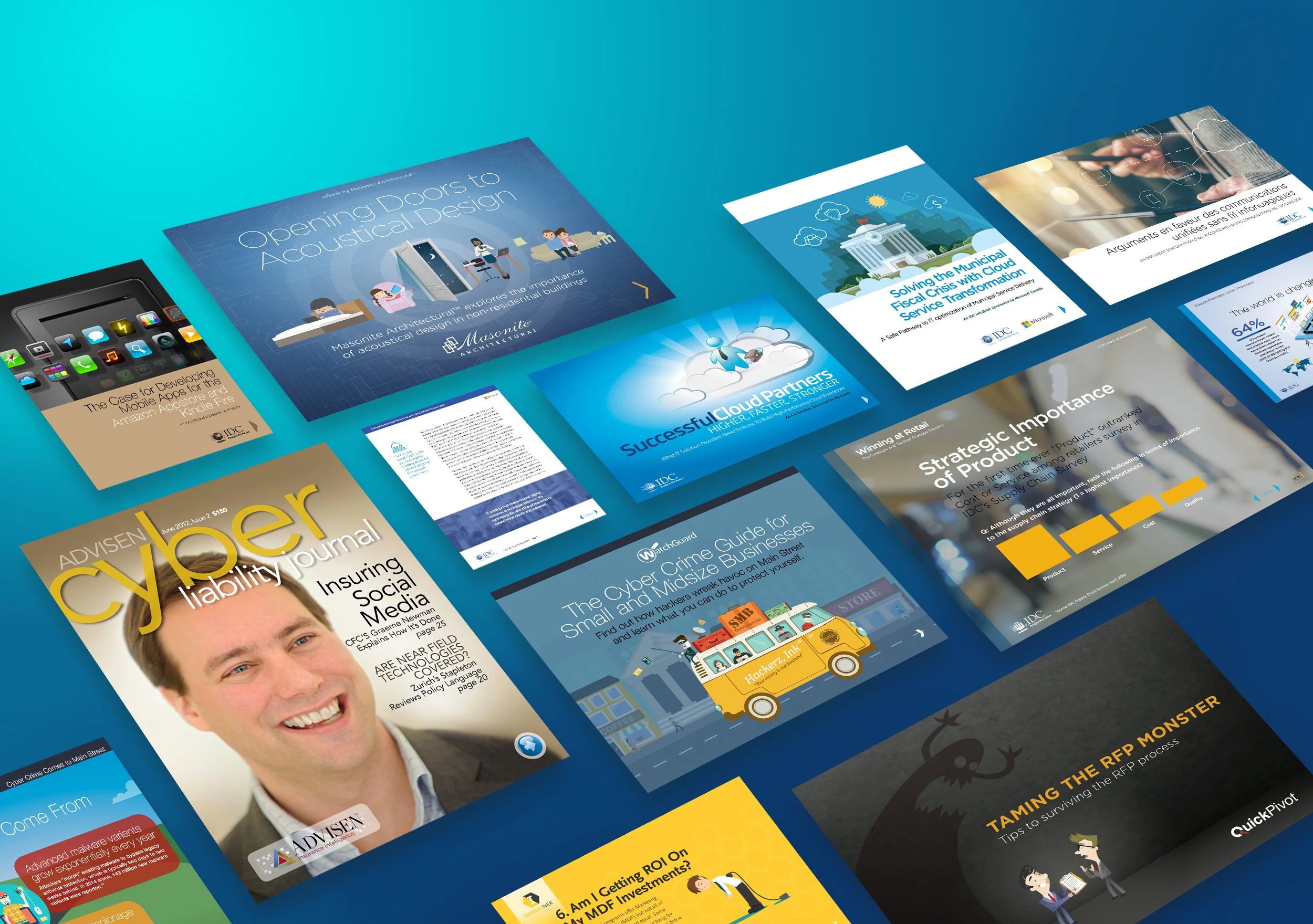
So many choices, and they all have their place. Here are some tips.
There are so many choices when it comes to visual media. From the printed page to an on-screen digital media experience, if you want your content seen, used and shared—it makes a difference in not only how well you create the content, but which type of content you create.
So many choices, and they all have their place. Here are some tips.
There are so many choices when it comes to visual media. From the printed page to an on-screen digital media experience, if you want your content seen, used and shared—it makes a difference in not only how well you create the content, but which type of content you create.
One thing to keep in mind however, you can mix and match— and many “digital” assets sort of share the entire realm. What I mean is that you can for instance create the same interactive document on a PDF, ePub AND Website— while having a static printed version for events or meetings. Nonetheless, there are pluses and negatives of each type of media, and the strategy you use makes a difference.
Ultimately, the strategy you use to create and deploy your content and media needs to keep the audience (reader) in mind. If they don’t engage, then the effort is wasted. So your strategy often begins with what type of creative media you want to deploy on—PDF, ePub, online, or print. Let’s explore the pros and cons of each.
Be sure to also download my Creative Menu. It has great tips, ideas and samples for every deliverable.
PDFs aren’t dead, in fact far from it. They continue to modernize, update, and develop more bells and whistles for one of the most popular and stable file types globally. The portable document format (PDF) has many more advantages than disadvantages. And in fact with the growing concern of security and intellectual property protection, it has a huge edge over anything online that grows more unstable every day.
What you can create with PDFs
Infographics
Ebooks
White papers
Documents
Interactive documents
Forms
eMagazines
Digital version of everything you print
Interactive documents
PDF advantages
Stable file format
Supported globally on all devices/machines
Simple
High security, hard to hack
Easy to protect content, lock and secure
Easy to edit, mark up, and correct
Easy to share by email, online, or texting
Easily add interactive forms
Easily add hyperlinks and basic interactivity
Can be very small in file size
Easy to edit and re-create
PDF disadvantages
Poor responsive nature on-screen
You need some know-how to use features
Advanced techniques (interactivity) require skill
ePub
Much like PDF’s ePubs are still a “thing.” Still being supported and developed along with improvements and tech that improve their file format. The electronic publication (ePub) allows another stable and popular format that actually add a bit more responsiveness and modern functionality that sort of add to what might lack on pdfs in-between what can be done electronically on a device or screen.
What you can create with ePubs
Interactive ebooks and publications
Interactive documents
ePub advantages
More interactive than pdfs
More responsive in nature
Great for ePub readers
Works on all MODERN devices
ePub disadvantages
Won’t work on all devices (older ones)
Difficult to create
Difficult to edit and work with
Difficult to re-create simply
A little unstable on certain devices
Not a widely or commonly understood format
Online (on-screen digital experience)
All websites and digital media are viewed on devices. Phones, tablets, laptops, smart TVs, and then of course desktop computers. Viewing websites—watching Netflix, YouTube, or anything on a screen needs to be responsive, and thought of as an “on screen” experience. It’s vital. No longer is it “just a website.” Or “just digital content.” You need to think of the experience AS an on-screen digital media experience to ensure an engaging on-screen experience for your audience.
Everything between planning and the actual user experience. I’d categorize this also as “online” because the content you create (website, video, movie, etc…) will no doubt be hosted, delivered, downloaded, or uploaded somewhere “online.” Here’s the reality: EVERYONE is online. And everyone watches something. Be it news, movies, websites, video, podcasts, TV shows, animation, etc… People want to be either entertained or educated. That’s the key.
What you can create with on-screen electronic media
Websites
Infographics
Video
Animation
Podcast
Vlogs
Games
Shows
Movies
Documentaries
News formats
Blogs
Interactive experiences
Interactive material
Forms
Online advantages
Modern and widely accepted and in-demand
(Everyone wants it online)
Everyone is online—always, on many devices
Highly responsive
Incorporates analytics and data
Online disadvantages
Can be very complex to create
Can be time consuming and expensive
Often requires hosting, domain, and other technology
More time consuming to edit and revise
Requires certain skillset, not a “common” format
Takes a lot of expertise, planning, and work to do well
Continuous security threat
Easy to steal content
SEO can be very complex to do correctly
HUGE amounts of traffic and competition
Website Examples
https://www.directdigitalholdings.com
https://www.angellicbeauty.com
Online Newsletter Examples
https://www.skincarephysiciansnewsletter.net
Online Responsive Infographics
http://www.weblivenow.com/samples/infographics/online-basic
http://www.weblivenow.com/idc/infographics/responsive/DisasterRecoverySolution
http://www.weblivenow.com/samples/animation/data-dilemma-html/index.html
http://www.weblivenow.com/samples/minigraphics/2/index.html
http://www.weblivenow.com/samples/minigraphics/3/index.html
Animation Samples
Print—although on hiatus in a pandemic year with people afraid to touch things with germs, print has finally met a threshold where it meets technology and simply has changed a little, that’s about it. As long as humans with fingers and senses are here on earth, they’ll always appreciate a tactile experience. So while print days of old have met their end (print, print, and print some more), print is still an excellent choice for very precise and strategic reasons though. And definitely secondary to anything digital. Everything from slick printed flyers and folders to business cards and books, they have their place.
What you can create with print
Magazines
Books
Flyers
Media kits
Bookmarks
Booklets
Mailers
Postcards
Business cards
Sell sheets
Event material
Print advantages
Tactile, hold in hand
Stands out now as “different” against online
Easy to see— in your face
Secure, no online threat
Timeless if saved
Easy to grab and view
Can be excellent version along with digital media
Print disadvantages
Opposite of online
Seems “old-school” to some
Can be pricey
Can be tricky to create good quality items (requires skill)
Once printed, cannot be fixed
Useless on devices— unless digital version created
The Bottom Line
PDF, ePub, online and print all have their place. Simply start with (1) what you want, (2) what your clients will respond to, (3) what you can afford (time and money), and what will align with your campaign or project goals. PDF’s a safe bet, ePubs can do neat stuff (but so can pdfs)— and digital media is modern, hip, cool and sort of the “norm.” And print— well, it ain’t dead! So use them all wisely and often interplay with one another, and you’re sure to do well with the variety—otherwise, PLEASE do consult a creative professional. They (like myself) love providing help, solutions, samples and ideas!
Get Creative—Faster, better, cheaper. Don’t get lost in the realm of media. I provide free coaching, consulting, and guidance—always. And then, I can also provide all the creative services you need to get your media in hand and working for you—quickly and affordably.
So please contact me any time to discuss your media needs. todd@mitchellcreativegroup.com, https://www.mitchellcreativegroup.com, (508) 494-8182.
Video intro for youtube— video intro ideas
A video intro, also called a “stinger” or simply an “intro” is an animated, energetic, and entertaining way of introducing your podcast, show, video or presentation. Think of every cool TV show or movie. Maybe a podcast, or online video. Most of them have really cool intros created. With a simple (but thought out) creative direction and graphical layout they’re pretty easy to produce.
Here are a few simple power tips on video intros:
1. Think brand. Logo, color, fonts, style. Make that the main ingredient.
2. Quality & Impact. Think of your audience and what they’ll find interesting. Hit the “cool” factor! you want to wow and entice!
3. Short and sweet. Make it simple. Make it strong.
Software? You’ll mostly need things like Adobe Illustrator, Photoshop, and After Effects. Final Cut Pro, Quicktime, Audition, Audacity, Premiere. Also, access to audio (music tracks), sound effects, and sometimes voice over talent. I like to make them myself, or hire out talent. You can also find sources online as well.
Of course, hiring creative groups like what I do help make it faster and easier. I believe in simplicity and providing creative at an honest and reasonable cost to get you on the right path. But don’t skimp! Create excellence, and you get better results.
Video Stinger Sample for podcast, video and more!
Easy to create, simple to produce.
Contact me to get one started!
todd@mitchellcreativegroup.com
https://www.mitchellcreativegroup.com
Here are some sample intros: