
Infographics Best Practices
Best Practices for Creating Effective Infographics
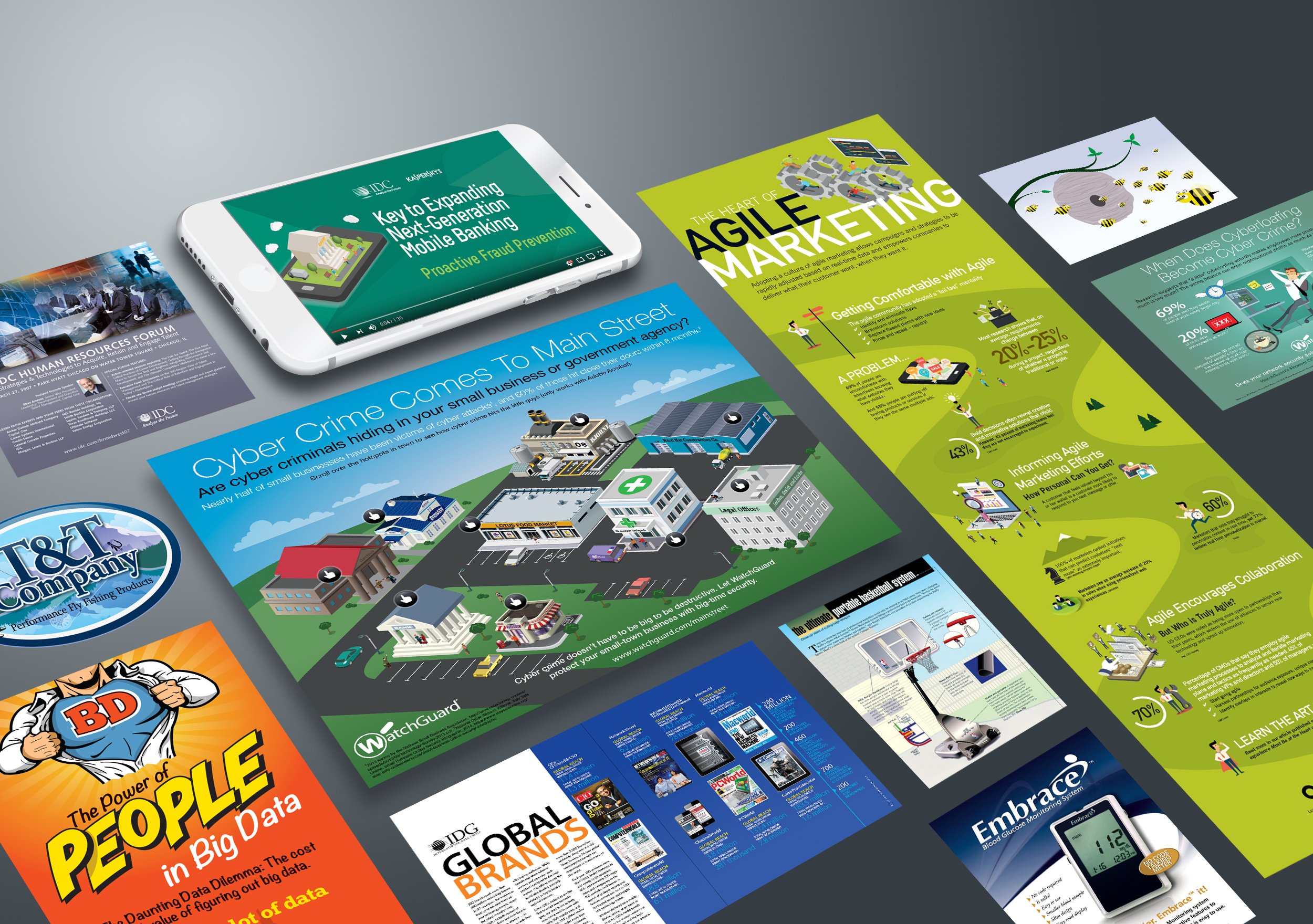
Infographics remain one of the most popular and effective marketing tools. They take information, ideas, technology, products, and services and turn them into engaging visual stories that people can understand quickly.
But there's a big difference between an infographic that simply looks good and one that actually works.
The best infographics combine strong writing, thoughtful marketing, relevant data, and smart design. They capture attention, communicate a message, and give people a reason to learn more.
Here are 10 important considerations for creating an effective infographic.
1. Establish your brand standards
Are there existing brand guidelines that need to be followed? Consider your colors, typography, logos, imagery, and overall visual style. A good infographic should feel like a natural extension of your brand.
2. Gather examples and inspiration
Are there infographics you've seen that you particularly like? Sharing examples helps establish the look, feel, and direction of the project before the design process begins.
3. Determine who is developing the content
Do you already have the content, or do you need help developing it? Strong writing is just as important as strong design. The information needs to be accurate, relevant, engaging, and organized in a way that makes sense to the reader.
4. Start with existing content
An infographic can be developed from material you already have, such as a white paper, presentation, technical document, blog article, or product brochure. The challenge is converting that information into shorter, more visual pieces that communicate the important points quickly.
5. Develop something entirely new
Sometimes the best approach is to start from scratch. This means developing the concept, researching the subject, identifying important facts and data points, and creating a story that guides the reader from beginning to end.
6. Write specifically for an infographic
If you're supplying the content, remember that an infographic isn't a brochure or an article. Keep the writing concise. Focus on short statements, compelling facts, meaningful statistics, and a strong call to action.
Think of it as stacking individual building blocks of information. Each one should contribute something meaningful to the bigger picture.
7. Consider how the infographic will be used
Will this be a standalone infographic, or do you plan to reuse portions of it in other marketing materials? With some planning, one infographic can become multiple social media graphics, website visuals, email content, presentation slides, and more.
Designing with those possibilities in mind can make your investment go much further.
8. Establish a realistic budget
Infographic pricing varies considerably depending on the research, writing, complexity, illustration, and level of design involved.
A straightforward infographic might start around $250, while more involved professional projects can range from $1,500 to $3,500 or more. Highly specialized or interactive infographics can exceed $5,000.
Interactive features, custom illustrations, animation, and clickable elements can add another dimension to the experience.
9. Plan your marketing and distribution
Even the best infographic needs an audience. How will people find it? Will it be shared on social media, featured on your website, included in email campaigns, or distributed through sales and marketing channels?
Think beyond the initial graphic. A well-planned infographic can generate 20 or more individual pieces of supporting content, extending its reach and usefulness across multiple platforms.
10. Set a timeline
Do you have a target completion date? Allow enough time for research, content development, design, revisions, and final production. More complex projects may also require additional time for approvals and technical development.
The bottom line
A successful infographic starts long before anyone opens a design program.
The strongest results happen when writing, marketing, and design work together from the beginning. Start with a clear message, give people information worth their attention, and present it in a way that's easy to understand and remember.
That's how you turn information into something people actually want to look at, read, and share.