Creative Blog.

The Importance of Branding
A “brand” is a story. It’s a relationship, a label, a mark, and a meaning. It’s another word for a logo, but the logo is only a small part of a brand, and it has a lot of information behind it. A brand has a much wider narrative and descriptive nature that outlines every aspect of whatever it is. What it means, what it represents, why it is, how it is… the color, the font, and how things are said about it. A brand can turn a $2 piece of cloth into a $45 Nike t-shirt. THAT is the power of brand.
To your product, business, service, or idea— branding can be the difference between success and failure.
A “brand” is a story. It’s a relationship, a label, a mark, and a meaning. It’s another word for a logo, but the logo is only a small part of a brand, and it has a lot of information behind it. A brand has a much wider narrative and descriptive nature that outlines every aspect of whatever it is. What it means, what it represents, why it is, how it is… the color, the font, and how things are said about it. A brand can turn a $2 piece of cloth into a $45 Nike t-shirt. THAT is the power of brand.
Think about a box of cereal, carton of milk, a t-shirt with a logo on it, or a pair of sneakers. Everything that exists by manufacture or in concept—by people—including many actual people, is a brand. Lebron James is a brand. Michael Jackson, the Pope, and even Donald Trump is a brand. The Boston Red Sox, Nike, Google, Dole, Subaru, Coca-Cola, etc… they are all brands. They all have a special story behind it, and they all have an effect on a certain number of people—personally, emotionally, and financially.
Imagine the effect historical figures have had even after thousands of years. Jesus, Lao Tzu, Martin Luther King, Ghandi, Muhammad, and so many others have a deeply emotional meaning to so many people and have such an impact on millions. Each of us has our own personal brand as well. Who we are, what we are, what we do, what we believe, and our talents and abilities all branch out and touch others. We have an effect on the world and others. How we wear our hair, our clothing, and all of our choices—are all part of our personal brand.
And then what do we do as people? We are drawn to, follow, brag about or despise other brands. We wear them, we eat them, we discuss them… Think of all the “labels” right now you are wearing. Think of the brands of coffee, food, water, and products around your home or all around you— online, in stores… Brands, brands, and more brands!
So from a marketing perspective, that’s important to understand. When you are actively marketing a brand—a product, service, or idea—you need to have a thorough understanding of two key parts: The brand story, and the audience. When you understand both of those, you can first tell the correct—and hopefully interesting, engaging, and exciting storyline of that brand, and then thoroughly understand the people who want to see it, why they might want to see it, and what it is they need to see.
That way, you can put the two together, and then the relationship is born. That relationship Is the person and the brand. They go hand-in-hand and again, can be personal and intimate brands (for personal use) or consumer-based, financially motivated, and business related brands. And many of these brand relationships can and often do last a lifetime.
In marketing, advertising, and design therefore all aspects of the product, service, or idea needy to be perfectly assembled. A product has to have the right description and meaning, colors, fonts, packaging, ingredients, website, social media accounts, advertising and marketing plan, financial plan, growth plan, and more. A service has to have importance, value, uniqueness, and messaging that really connects with the audience, as well as all the aspects of a product above. An idea, yes even that, needs to have a tremendous amount of excitement, intrigue, value, and interest to even have potential to become a great brand.
There are BILLIONS of brands, and BILLIONS of failed or wasted and un-useful brands. But there are also BILLIONS of amazing, life-changing, inspiring, and powerful brands. And the difference often starts in the beginning in the planning phase, but can also be destroyed anywhere along the way. Think of any famous person that does or says something hurtful or foolish and “POOF,” gone is the brand… But heck, even the cigarette industry with its known super-deadly capacity, still remains strong. Branding!
So when we develop a brand—by thought and idea, or in actuality—all o the above criteria needs to be a part of that process to be effective. A lot of thought ideas, creativity and imagination, passion, and experience all need to be plugged into the process. Great brands are born out of creative and inspired thinking. And the miraculous part of that is that the best creative and imaginative process is deeply spiritual, creator-based (God or whatever your belief is), talent-based, and something you just can’t explain. It’s a skill that if nurtured, practiced, and literally allowed to flow through you—develops into the best personal or product-based brand that ever existed.
Here are a few starting points to start a killer product or company brand
1. Ideas first
A good thought process or discussion about the idea develops into many notes, concepts, drawings, and directions. Add awesome people to your conversation, and really explore and think and speak freely to let the process unwind.
2. Trust your inner Self
Begin with your self. Trust your self first and be really thoughtful and mindful of your ideas. Trust your heart and your own creativity and imagination and stick to that. Make sure you follow that deep inner guide. Trust that. This is where the brand begins—and should stay.
3. Team up with masters
It’s wise to seek relationships with masters. People you can not only trust—but have been there, have super high quality value, and even greater skills to really help guide you and contribute to great ideas. Learn from others, team up with others. While the idea is yours, it always takes a team. So hang out with winners, achievers, and go-getters.
4. Make action be your first priority
Ideas are great. But action is what makes the difference. Nothing exists without someone taking action. And I mean BIG action. Do it. Get started. Continue to take action. You must, must, must get the ball rolling, keep the ball rolling, and never stop. You are ALIVE and meant to live— to push on, to excel, exceed, and move. You have to put your ideas into action. Start with a single step today, plan for tomorrow’s, and after that… continually move, learn, grow, and change direction—but ACT!
5. Make your next best ally a creative professional
Unless you are one, you need creative talent. And GOOD creative talent—the best. The right logo, colors, fonts, websites, marketing, social media, printed material, and branding guidelines and management LITERALLY is everything. Any one of these parts if not done well will be the difference between success and failure. And like my own personal creative business model—make sure it’s someone you can really trust that puts your best interests first, will work harder for you than anyone else, is fairly and honestly priced, will work quickly, and values the relationship as if life depending on it. Second to that, but equally important is that they are passionately, spiritually, and powerfully experienced and extremely talented. The right creative team will be a caring, committed life-long partner, and will help you create the literal branding pieces you will ever need, make sure you remain consistent, change with the times, and continue to grow—and THRIVE! They will help you make more money, spend less money, affect more people.
6. Do the research—Without “analysis paralysis”
It’s important to see what else is out there. What else is being done, how it’s being done. Getting ideas, making sure there’s a market for it, etc… But don’t get hung up on “over” researching it. You can literally get mentally paralyzed by over examining or overthinking things and then never taking any action. So always be on the research, examination, and look out for what else is going on, but make it efficient—not a hinderance. Learn from it and ACT.
7. Create the what, why, and how
Create what many call a mission statement, elevator pitch, or creative brief. Write down WHAT it is in a very compelling, interesting and descriptive manner, WHY it is what it is or WHY you are doing what you are doing, and then HOW you intend on changing the world or marketplace with it—or HOW you intend on getting it out there (marketing plan). It should only be a paragraph, should be very concise, and VERY interesting and engaging. Run it by people you trust and/or admire and ask them what they think about it. “Test market” it to see how other might respond to it. See of someone might buy it before it even exists. But your mission—your statement—is probably one of the most important parts of the brand! If your what is lame, your why is trash, and your how is boring you can rest assured wasted time, money, and energy.
8. Market it well—and market it often
It’s also important to work with the right creative team to help you market your product, company or service today more than ever. With so many “channels” you have so many advertising, website, social media, event, email and other facets of delivering your message, you need to not only stay on track, be aggressive, and consistent—but know which ones will work specifically for you as well as which ones to avoid. You are now in a future of EXTREME traffic, competing with millions so your messaging needs to be perfect, and your audience reach needs to be crafted perfectly. And if done well, will establish a very solid future and successful outcome. You need to market your self, product, service, or company every day— and often multiple times a day to succeed. And the messaging needs to be perfect—not pointless rambling. So make the right relationship with key creative and marketing teams. They will guide and teach you.
Simple, practical, and inspired creative solutions. Free consulting. Free advice. Free first project for qualifiers. Creative strategies and solutions—made easy.
Get creative. http://www.mitchellcreativegroup.com, todd@mitchellcreativegroup.com, (508)494-8182.
© Copyright Todd Mitchell, Mitchell Creative Group, LLC

Get Sticky!
What’s the mystery behind stickers? Well, they’re pretty basic. They’re stickers. But there are a wide variety of sticker types that all have their purpose and using the right ones are really important.
What’s the mystery behind stickers? Well, they’re pretty basic. They’re stickers. But there are a wide variety of sticker types that all have their purpose and using the right ones are really important.
Key questions:
What are they for, how will they be used?
Rolls or individual stickers or labels?
How many might you need?
Investment or value—are they important or is cheap ok?
On one end—a simply-shaped sticker plopped right down on a piece of paper. On the other end, a huge window label in a department store (actually a window cling). There are for example permanent stickers (also called labels) that are more durable and won’t peel off easily. There are removable labels that easily come off (although depends on the material they are on). There are roll labels that come in certain quantities (starting usually at around 250 labels), and there are individual peel and stick labels.
So it really comes down to usage—how you will use these, and what they are for. On products, will they be outdoor or exposed to water? Are they food products that might be frozen? Will they be on a tool that you want clear edges on so there are no white colors detracting from the look and feel? There are labels so large you can literally wrap an entire vehicle with them.
Pricing: Stickers and label costs will all vary depending on the usage, type, quantity, and size. They might be as little as $20 for a handful on many online sites if quality is unimportant, and $250-$1000 plus for larger, more of, and better quality labels.
Clear, white, and zero backgrounds
Depending on your label or sticker, you may or may not want or require a background. For example, if it’s a letter character logo, you need something to hold the letters together so they all stick down together. So that may be on a white, colored, or clear background—such as like Scotch Tape material. Logos or graphics that ARE one solid shape, require no background, so can be “die cut” to that shape.

Imagine the clear background (top) holding the lettering together. Otherwise, blown apart, nothing to hold them.

As opposed to a graphic with a solid edge and colored insides—you can now die-cut this as this unique shape.
Sticker vs. Label
Stickers are usually digitally printed. Printed on machinery quickly and affordably. Resilient in most cases, but not always and good for simplicity. LABELS are often high end machinery-printed, and more resilient, and good with wet, cold, hot conditions.
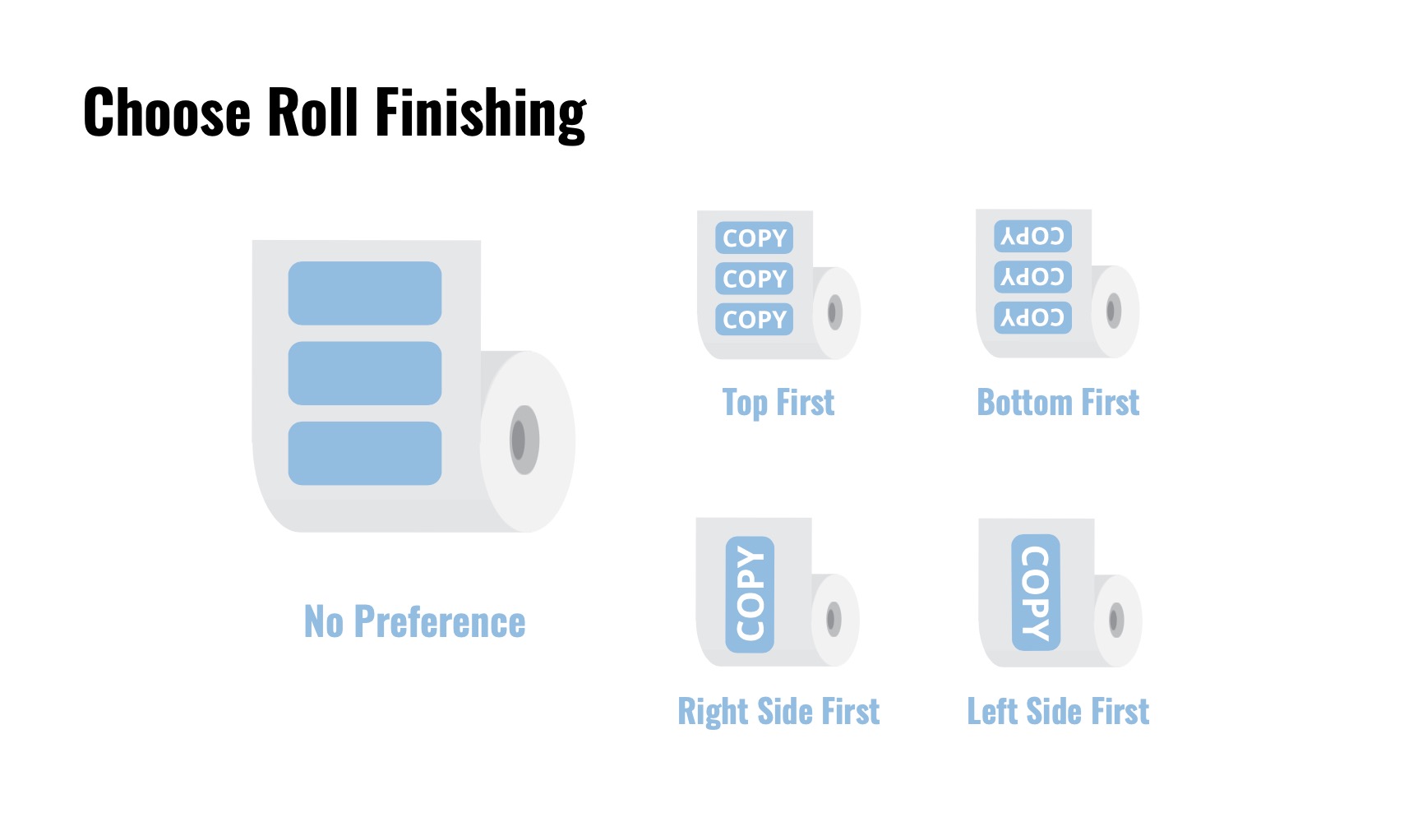
Rolls of labels can be set up for your label machines or convenience in pulling and placing…
Variety
Here are an assortment of sticker and label types to show you the variety and possibilities to start with. Content here can also be found at StickerGiant website, StickerYou website, and many other sticker printers…
DIE CUT STICKERS

Individual stickers with the back liners cut to the size and shape of the sticker. No die cut fees for custom shapes. Printed in full color on white polypropylene with outdoor durable laminate, in your choice of Glossy or Matte finish.
KISS CUT STICKERS

Digitally printed with free custom shapes with the backing material a little larger than the sticker itself. Can be used indoor or outdoor. Printed in full color on white polypropylene with an outdoor durable laminate in your choice of a Glossy or Matte finish.
GLOSSY WHITE LABELS

These custom glossy labels are perfect for product labeling and will resist water and oils. Digitally printed in full color on white polypropylene with indoor use laminate, and finished on a roll.
CLEAR LABELS
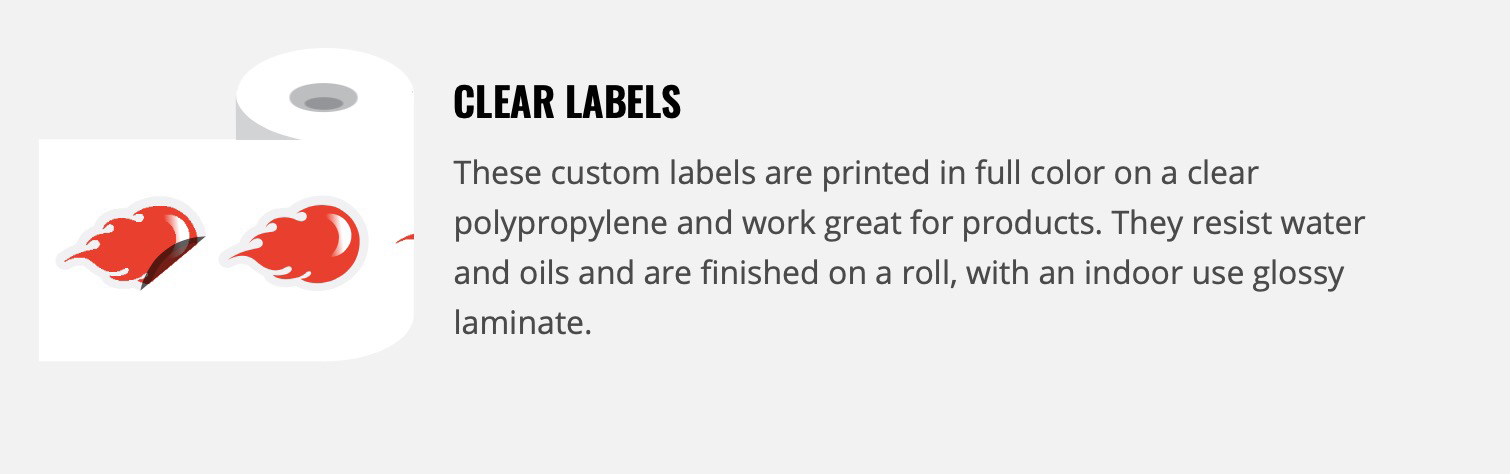
These custom labels are printed in full color on a clear polypropylene and work great for products. They resist water and oils and are finished on a roll, with an indoor use glossy laminate.
MATTE LABELS

These custom labels have a satin-like look, and are finished on a roll. They give products a high end appearance and are easy to write on. Printed in full color on white polypropylene with indoor use matte laminate.
CLEAR STICKERS
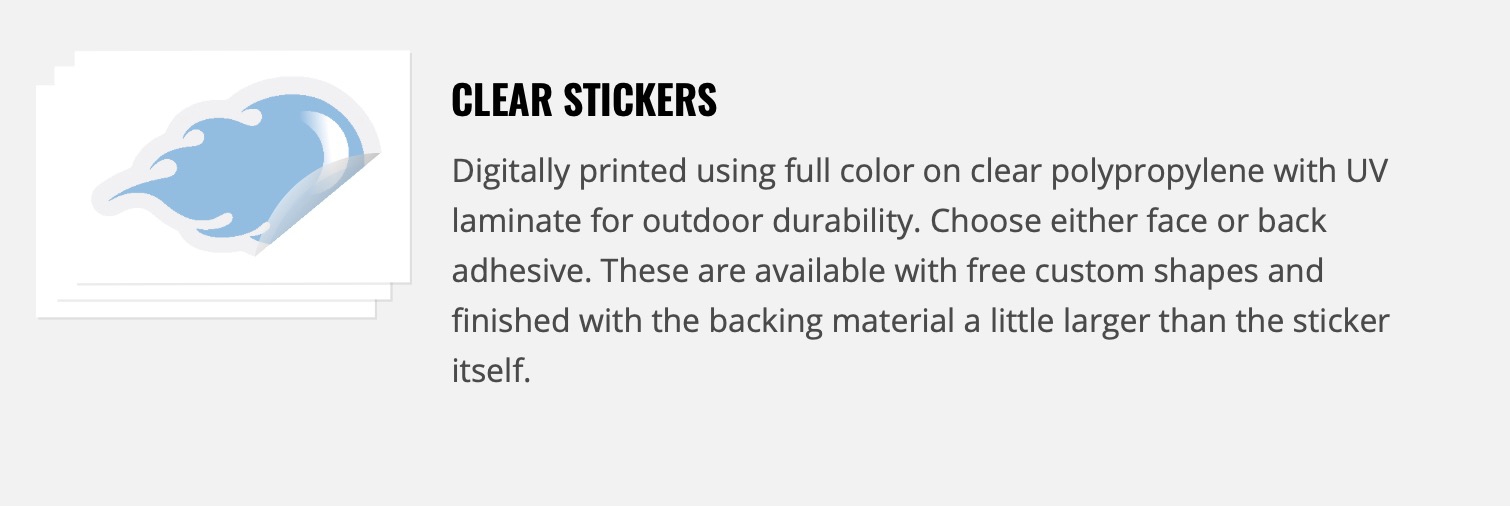
Digitally printed using full color on clear polypropylene with UV laminate for outdoor durability. Choose either face or back adhesive. These are available with free custom shapes and finished with the backing material a little larger than the sticker itself.
SILKSCREEN STICKERS

Spot color stickers, printed on a white vinyl with UV inks for outdoor use. Individual stickers with the back liners cut to the size and shape of the sticker.
STATIC CLINGS

A flexible vinyl that has a smooth, coated finish and will stick to clean glass surfaces utilizing the moisture in the air and on the glass to adhere to the surface. These do not use a sticky adhesive like our other sticker and label options.
stickers, labels, sticker printing, sticker printers, label printers, label company, sticker company, label designer, sticker designer, sticker design, label design, sticker graphics, sticker ideas, sticker prices, label prices

Creative pricing— what will it cost?
When it comes to pricing creative projects it helps to keep three primary things in mind: Value (worth), caliber (oomph level!), and investment (what can or should be spent). And while there is a wide range for each of these, the ideal cost is what’s most appropriate for that project. No matter what, think of it as a range—from basic and simple, to advanced and higher level.
When it comes to pricing creative projects it helps to keep three primary things in mind: Value (worth), caliber (oomph level!), and investment (what can or should be spent). And while there is a wide range for each of these, the ideal cost is what’s most appropriate for that project. No matter what, think of it as a range—from basic and simple, to advanced and higher level.
The “value”— is what it’s really worth. Think of gold vs. a sheet of paper. And when it comes to your project, is it valued high like gold or as a simple piece of paper. Is your project high profile, important, to get high exposure, and have a big impact on the audience? Or is it a simple, one-off, very basic project with little exposure?
The “caliber” is the “oomph level”—meaning how much oomph you want it to have. Putting more work into it affects the outcome. If you spend more time on designing it, using certain fonts, images, colors, etc… you will have more quality there. If you spend more time on the animation or website you will get more impact.
The “investment” is what it sounds like—how much you “should” invest. I emphasize that because mistake number 1 is that people think its about what they WANT to spend. If you want to spend $50 on a logo, you will get a lousy $50 logo. Whereas if you SHOULD invest in a real solid brand— spending the time, working a high caliber, and investing value behind it, the outcome will be tremendously different. And it’s not to say you should always spend more— in fact the opposite. Some projects SHOULD be a low cost. Some projects warrant simple, low cost solutions.
So consider these three pieces when pricing your creative projects. It will help you figure out the ideal and appropriate amount to spend.
Here are a few worksheets to help visualize the cost curves on certain projects.


If you are creative, create.
Too many people waste their time not living their true purpose. And if they’re creative, they often forgo their God given ability to truly create.
Too many people waste their time not living their true purpose. And if they’re creative, they often forgo their God given ability to truly create. That means letting go, and letting God as they say… Allowing your inner creativity sizzle and expand outward. It’s to be shared, exposed, and enjoyed by all.
Think of it as harnessed energy—if even only mental energy, it’s still energy. And if it’s not used or allowed to vent it will find a way to manifest itself. Often, repressed creativity leads one to a strange sense of feeling “off.” As if not connected, or not doing what you think you should be doing— or often a feeling of unhappiness.
When you are inspired (in-spirit) you are flowing. It feels right. Time passes by happily and often quickly. So imagine being a flower and “deciding” not to flower. Just a dead stalk. No beauty, no bees, no pollen, no sharing your nature with the universe. You are withholding and denying the purpose for which you were created. So if you are creative, CREATE.

Marketing ones creative Self
In addition to having talent and abilities, or drive and passion in the creative space, is marketing ones creative Self. If you do it for fun, sharing it to inspire others or letting your creative Self shine outward is a good idea.
In addition to having talent and abilities, or drive and passion in the creative space, is marketing ones creative Self. If you do it for fun, sharing it to inspire others or letting your creative Self shine outward is a good idea. The flower expresses its “Self” by nature— and so should you. And it’s not bragging or boasting—it’s being, expressing, and sharing. You know how you are drawn to others, impressed by works of art, or enamored by all the things in the world? By allowing your expression of creativity you align with and play and important part of that as well.
So how? Connect with or create a network. Social media is a great place to start. But friends, colleagues, associates, clubs, art shows, and other ways to get your “stuff” put there… Start with creating or sharing on social media though.
Professionally—you MUST market your Self. Your level of success, outcome and results are directly related to how much effort you put in to your marketing. And there are many, MANY ways of doing that today.
Start with social media. Create or work hard at using it regularly. Expand a useful, strategic, and meaningful list of contacts. People that will either help, support, help grow, or contribute to your growth, sales, and success. Create raving, exciting fans that want to be a part of your network. Create awesome, useful, meaningful content that they MUST have. Show your stuff, advertise and market your wares—regularly and consistently.
For beginners only…
Other ways to market your creative Self might be using social media advertising campaigns—connecting to qualified leads. People that need your services. You can also leverage modern day online clubs, such as Fivr (https://www.fiverr.com/start_selling), or InDeed (http://www.indeed.com)— two popular freelance sites that you can grow and expand your design business. There are downfalls there however, you share your money with their fees— and become reliant on their platforms instead of your own— which I personally think is best. But, starting out, sure— grab some freelance work on those sites. Work it, expand it, grow it. At least try these things and see what works… And there are others. Etsy is a great DIY site for master crafters and designers alike. Amazon, Google, and other big players have stores and sites that allow you to sell your wares as well. Even Craigs List (http://www.craigslist.org) has leads if you search or advertise your stuff on their help wanted section.
The bottom line?
You need to get your name out there. Advertise your stuff. Talk about it, develop strategic, aggressive, and meaningful game plans to get your name out there, advertise your business, services, or abilities. And remember you get out what you put in. BIG (well thought out, meaningful, and truly passionate) effort means big results. LITTLE and meaningless effort will equate to absolutely nothing. It’s that simple.
If you want more advice, or help developing a game plan, or how to get massive results in your business, get a hold of me. Email todd@mitchellcreativegroup.com, or call me at (508) 494-8182.
Simple, practical, and inspired creative. Free creative coaching. Free first project for qualifiers. The best creative solution.
Get creative. http://www.mitchellcreativegroup.com, todd@mitchellcreativegroup.com, (508)494-8182.
© Copyright Todd Mitchell, Mitchell Creative Group, LLC

eDocuments. The chameleon of design.
There’s no creative law that says “thou shall only create content the way it’s always been.” In the creative space, tapping into imagination and creativity means allowing exciting, fresh, and invigorating ideas to flow through and out. And that goes for everything— and in this case, ebooks and infographics.
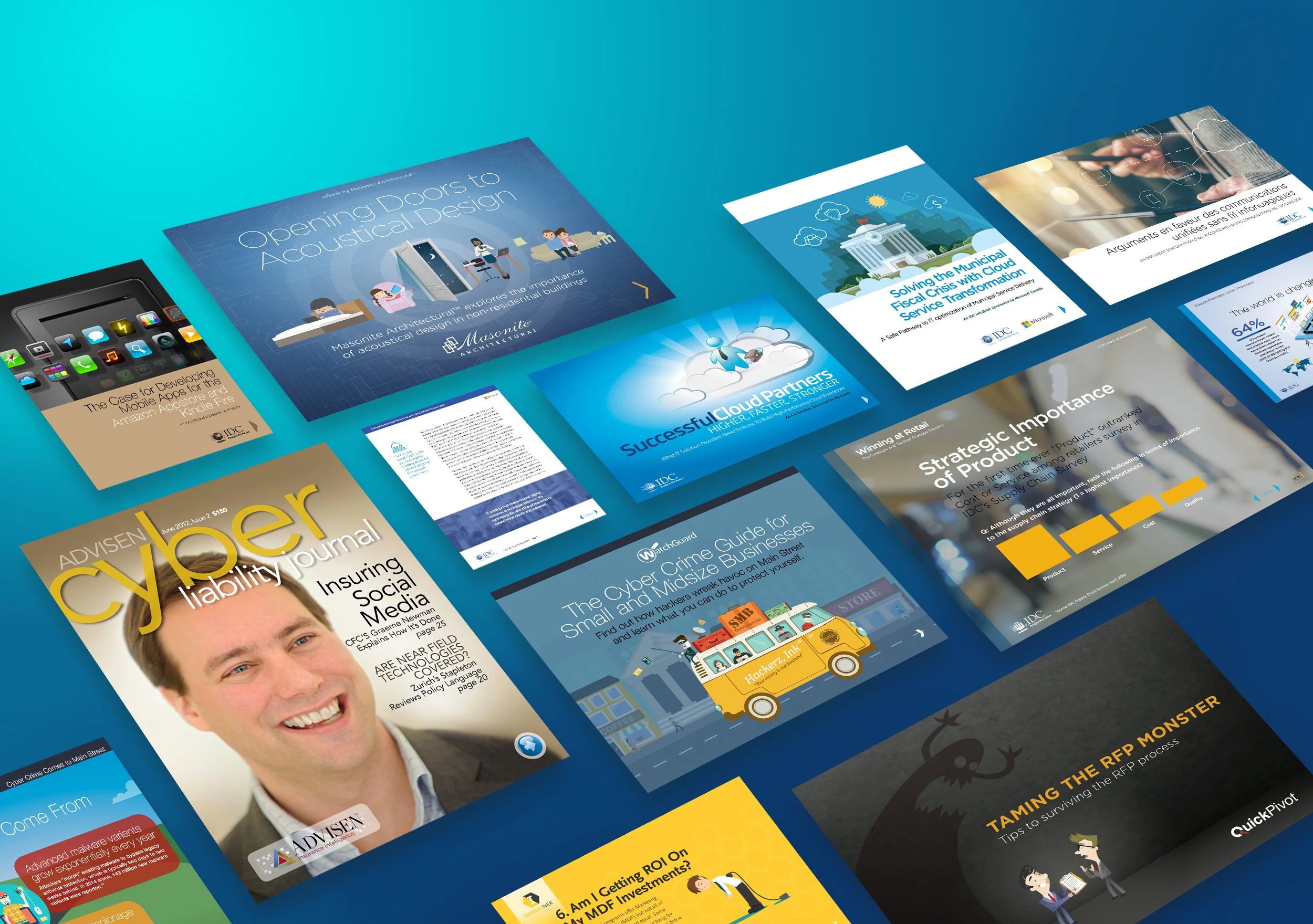
I wanted to re-post a prior blog here by popular demand! To show you how one bit of content—one document can be conformed into MANY different types of eDocuments…
There’s no creative law that says “thou shall only create content the way it’s always been.” In the creative space, tapping into imagination and creativity means allowing exciting, fresh, and invigorating ideas to flow through and out. And that goes for everything— and in this case, ebooks and infographics.
An ebook (electronic book) is an on-screen document that can be as creatively intense— full of great content, awesome artwork, and exciting interactivity— or as simple as plain old text. An infographic is a ‘graphical representation’ of data or content, and can also be exciting, well-designed and fun, or as simple as can be. The goal should be to make the content easy to digest, fun to engage, and ultimately help throw your customers down the beautiful funnel directly to you!
The best part of imagination, at least for me, is that you can create anything. That is, after all, what creation is— right? And when it comes to ANY deliverable or creative project, there’s no reason to stick to the ‘norm.’ Imagine—create.
For ebooks, and infographics I make it a must that I always think creatively—making it sing, energize, and behave in a way that makes it super compelling and easy to understand. Fonts, color, graphics, layout, design, and then the myriad of options that allow us to add interactivity. We can create ePubs, embed video, other content, add pop-ups of data, sound, and much more!
So another great way to be creative is to pioneer and explore multiple options, which include ‘blending deliverables.’ In this case, introducing ebooks to infographics. And in many ways they really are the same. With an ebook, it’s content—usually longer text… but usually has some graphics throughout. With an infographic, its content—but more artistic, visually and graphically represented, and not so text heavy. So why not merge the two?
Check out the samples below. And remember, the options are almost infinite with creativity. And with the variety of unlimited design potential, art, and imagination—matched with technology… Anything is possible.
In the following examples, I started with an ebook— actually, an “InfoBrief” which is a variety of ebook—some text, some graphics. I created this InfoBrief for IDC originally with only that project in mind, and then using that as a model— converted it into several options to show you what “can” be done with any content. And illustrate the hybrid merging of ebook documents and infographics. How they can really work very nicely together.
InfoBrief
This example here below is of the original InfoBrief (ebook).

View InfoBrief, online as an “ePub” (electronic online view):
This ePub option allows more interactivity, embedding, social sharing, analytics, pdf download option, animation, and more… Same original InfoBrief, just in ePub format.
https://indd.adobe.com/view/18874d9b-7c72-4c19-8516-32e81d9abd40

Mobile Doc
The same InfoBrief, converted and created as a “mobile document.” A version that can be downloaded and viewed nicely on a mobile device.
View Mobile Doc as a pdf on browser (ideal to view on a mobile device):

Direct download Mobile Doc as an “ePub”— viewed on device ePub viewer (ideal to view on a mobile device):

InfoDoc (or eDoc)—
A much more graphical representation of an ebook or InfoBrief. Treating pages with more graphical “oomph”—color, art, layout. AND blending in the infographic components. I took pages of content and created “infographics” on a page, rather than flowing all the text.
The InfoDoc (or eDoc) is a hybrid ebook/infographic. Filling the gap between the two. As shown particularly on page 7— it combines prior ebook pages of content and merges that content into an info-graphical page…
Download and view “pdf” on your device:
Filling the eBook - InfoGraphic “gap”

Download and view “ePub” on your device:
Filling the eBook - InfoGraphic “gap”

Simple, practical, and inspired creative. Free creative coaching. Free first project for qualifiers. The best creative solution. 3.2.1. Get creative. http://www.mitchellcreativegroup.com, todd@mitchellcreativegroup.com, (508)494-8182.
© Copyright Todd Mitchell, Mitchell Creative Group, LLC

eBook vs. InfoGraphics— filling the “gap”
There’s no creative law that says “thou shall only create content the way it’s always been.” In the creative space, tapping into imagination and creativity means allowing exciting, fresh, and invigorating ideas to flow through and out. And that goes for everything— and in this case, ebooks and infographics.
There’s no creative law that says “thou shall only create content the way it’s always been.” In the creative space, tapping into imagination and creativity means allowing exciting, fresh, and invigorating ideas to flow through and out. And that goes for everything— and in this case, ebooks and infographics.
An ebook (electronic book) is an on-screen document that can be as creatively intense— full of great content, awesome artwork, and exciting interactivity— or as simple as plain old text. An infographic is a ‘graphical representation’ of data or content, and can also be exciting, well-designed and fun, or as simple as can be. The goal should be to make the content easy to digest, fun to engage, and ultimately help throw your customers down the beautiful funnel directly to you!
The best part of imagination, at least for me, is that you can create anything. That is, after all, what creation is— right? And when it comes to ANY deliverable or creative project, there’s no reason to stick to the ‘norm.’ Imagine—create.
For ebooks, and infographics I make it a must that I always think creatively—making it sing, energize, and behave in a way that makes it super compelling and easy to understand. Fonts, color, graphics, layout, design, and then the myriad of options that allow us to add interactivity. We can create ePubs, embed video, other content, add pop-ups of data, sound, and much more!
So another great way to be creative is to pioneer and explore multiple options, which include ‘blending deliverables.’ In this case, introducing ebooks to infographics. And in many ways they really are the same. With an ebook, it’s content—usually longer text… but usually has some graphics throughout. With an infographic, its content—but more artistic, visually and graphically represented, and not so text heavy. So why not merge the two?
Check out the samples below. And remember, the options are almost infinite with creativity. And with the variety of unlimited design potential, art, and imagination—matched with technology… Anything is possible.
In the following examples, I started with an ebook— actually, an “InfoBrief” which is a variety of ebook—some text, some graphics. I created this InfoBrief for IDC originally with only that project in mind, and then using that as a model— converted it into several options to show you what “can” be done with any content. And illustrate the hybrid merging of ebook documents and infographics. How they can really work very nicely together.
InfoBrief
This example here below is of the original InfoBrief (ebook).
View InfoBrief, online as an “ePub” (electronic online view):
This ePub option allows more interactivity, embedding, social sharing, analytics, pdf download option, animation, and more… Same original InfoBrief, just in ePub format.
https://indd.adobe.com/view/18874d9b-7c72-4c19-8516-32e81d9abd40
Mobile Doc
The same InfoBrief, converted and created as a “mobile document.” A version that can be downloaded and viewed nicely on a mobile device.
View Mobile Doc as a pdf on browser (ideal to view on a mobile device):
Direct download Mobile Doc as an “ePub”— viewed on device ePub viewer (ideal to view on a mobile device):
InfoDoc (or eDoc)—
A much more graphical representation of an ebook or InfoBrief. Treating pages with more graphical “oomph”—color, art, layout. AND blending in the infographic components. I took pages of content and created “infographics” on a page, rather than flowing all the text.
The InfoDoc (or eDoc) is a hybrid ebook/infographic. Filling the gap between the two. As shown particularly on page 7— it combines prior ebook pages of content and merges that content into an info-graphical page…
Download and view “pdf” on your device:
Filling the eBook - InfoGraphic “gap”
Download and view “ePub” on your device:
Filling the eBook - InfoGraphic “gap”
Simple, practical, and inspired creative. Free creative coaching. Free first project for qualifiers. The best creative solution. 3.2.1. Get creative. http://www.mitchellcreativegroup.com, todd@mitchellcreativegroup.com, (508)494-8182.
© Copyright Todd Mitchell, Mitchell Creative Group, LLC

Infographic Content Checklist
The most important part of an infographic is the content. It’s a good idea to work with someone that understands writing, editing, or publishing. Infographic content is a unique style and if done incorrectly can be costly, and very confusing to the reader.
The most important part of an infographic is the content. It’s a good idea to work with someone that understands writing, editing, or publishing. Infographic content is a unique style and if done incorrectly can be costly, and very confusing to the reader.
Here is a checklist to help you create the ideal infographic content...
1. Create an interesting, meaningful, and compelling theme and title, making sure it makes sense with your message and story you want to tell.
2. Decide on the right type of graphic deliverable. It depends on whether you have more text, or want more simplicity. Create content FOR that type of graphic. For example, tall, wide, full page, interactive, etc…
3. Create an ordered story line so the information you tell has an interesting story flow to it. Section by section, or page by page. You want the info to flow nicely and your audience to actually read it and understand it!
4. Be sure you have an introduction if it needs explaining. Many people don’t understand your complex tech stuff. Make it easy to understand.
5. Have a methodology page or section if it requires it so the audience knows where the content came from.
6. Have a closing section with a call to action. Where to go now? Where can I learn more?
7. Have a skilled and experienced writer help you create content.
8. Have ALL internal team people review the content BEFORE going into graphic creation. Also be sure the client signs off on the concept theme and content first.
9. Keep data simple, clean, minimal, direct, to the point, interesting, and engaging.
10. Simplify any complex Powerpoint charts and extract the key message of that graphic? What’s most important to call out here?
11. Keep length of graphic project as short and direct as possible. Cut out anything remotely unnecessary.
When it comes to infographics, the best ones get results. I’ll create one for free if that’s what’s needed to get started! Let’s get moving! please go to http://www.mitchellcreativegroup.com, or call Todd@ (508)494-8182

Creating interest in a mailings SHOULD be fun!
We turned this number one ranking in exposure to oncologists and hematologists into a fun, large, colorful “game show” themed mailer.

When a client like the New England Journal of Medicine is rightly proud of their new number one ranking, we need to let people know! Especially key marketers with budgets—they need to place ads in the BEST advertising stage possible for maximum exposure!
We turned this number one ranking in exposure to oncologists and hematologists into a fun, large, colorful “game show” themed mailer.
Partnering with the expert and highly-valued long time partner at Shawmut Printing we leveraged soft-touch aqueous coated special paper, super bright inks, custom die cut window doors, and a clear envelope for safe travel in the mail!

Event websites made easy.
It doesn’t take much to get people to your event. Email your list, promote it on your own business website, and let people know on your social media channels. You can even mail out simple promo cards to build awareness. And all of that can and should be real simple to do.
Event websites made easy.
It doesn’t take much to get people to your event. Email your list, promote it on your own business website, and let people know on your social media channels. You can even mail out simple promo cards to build awareness. And all of that can and should be real simple to do.
But you can also create a simple custom web page for your event where you can track traffic, get analytic data, promote speakers, sponsors or venue information. It’s a “hub” you can now share that folks go to FROM all your other communication channels. Promote it and lead them to a custom event site.
You can then make all updated on the site, and have it become the goto site for the agenda, events, and more. It can also hyperlink to your own registration pages, or we can help you create that.
Cost and time are minimal here. We can get you a custom url, and set it up in under a week, and within a very reasonable budget (average $2K-$5K). Depends on size and budget.
Let’s get creative.